
Through the mastery of volcanic concrete and the structural perfection of the arch, Roman architects built monuments that celebrated the greatness of Rome. Buildings were more than functional. They were weapons of political theater, civic domination, and imperial propaganda that physically embodied the changing Roman world. Roman history and the history of Western architecture can be tracked through Rome’s monuments. From grand temples to marvelous stadiums, to imperial mausoleums, these are ten of Rome’s most famous buildings that you should know.
1. The Colosseum and the Blueprint for Modern Stadiums
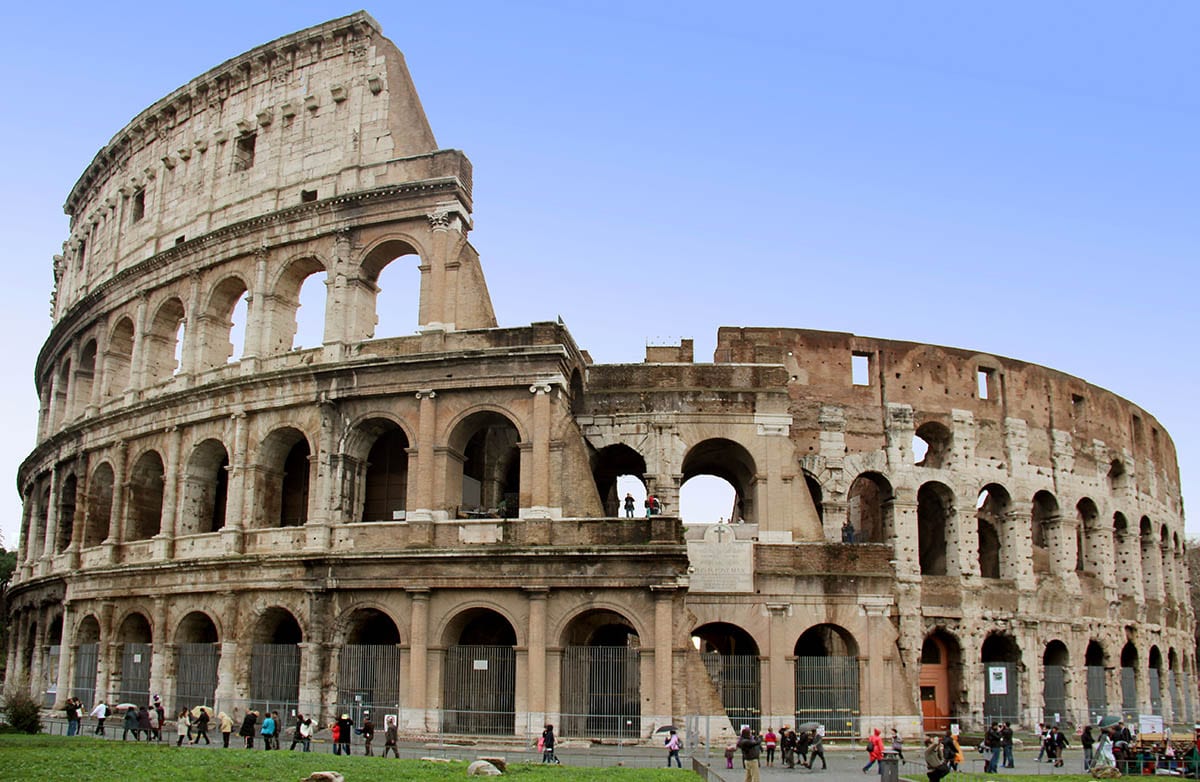
The Flavian Amphitheater, better known as the Colosseum, is one of the most recognized buildings in the world. It was built by the Flavian emperors between AD 70 and 80 as a piece of propaganda for their new dynasty, painting themselves as patrons of the people.
The last Julio-Claudian emperor, Nero, acquired public property following the Great Fire of Rome in AD 64 (which he is accused of starting) to build a giant Domus Aurea (golden house) for himself. The Flavians built the Colosseum over part of Nero’s grand property, restoring the land to the people. Built with spoils taken by the Flavians from Jerusalem during the first Roman-Jewish War, the Colosseum could hold between 50,000 and 80,000 people.
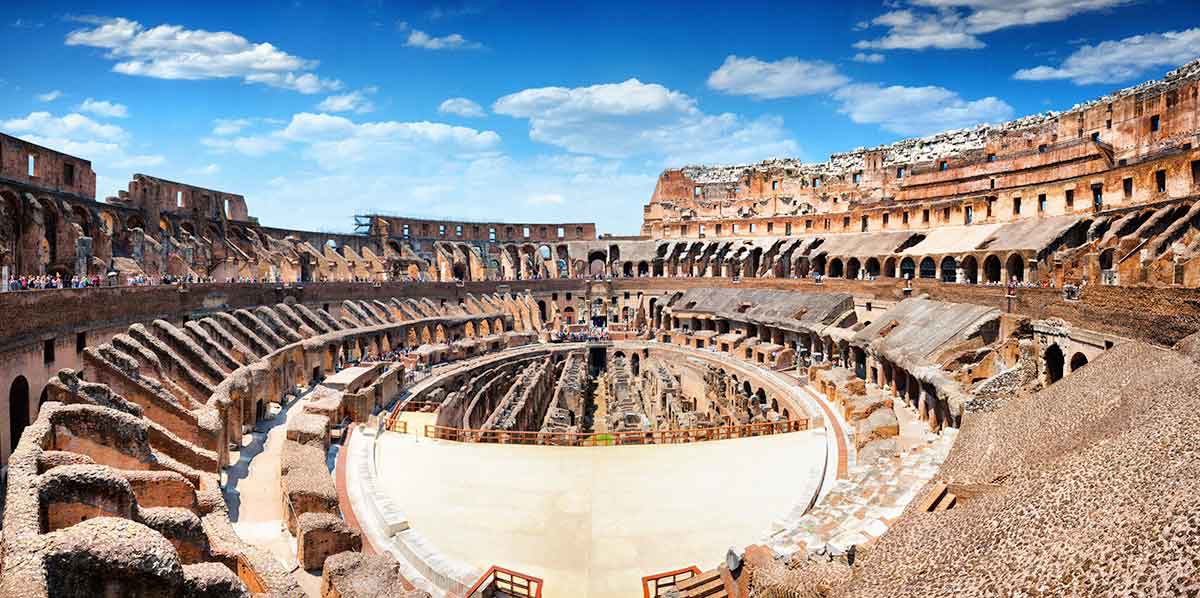
The Colosseum was inaugurated in AD 80 with 100 days of games and spectacles, allowing the Flavians to ingratiate themselves with the people through “bread and circuses” (free bread was distributed at shows). The Colosseum hosted animal hunts, mock sea battles, reenactments of famous battles, gladiatorial events, and public executions.
Gladiatorial combat was banned in the 5th century AD, but the Colosseum survived and continued to be used as an arena. In Medieval times, it was used as a cemetery and as a space for workshops. Around the turn of the 13th century, it was converted into a castle, but a century later, it was abandoned and became a den for thieves and bandits. It was then damaged by an earthquake, and rubble was used for other building projects. Restoration and preservation began in the 18th and 19th centuries. The Colosseum is now one of the most visited tourist attractions in the world.
2. The Pantheon and the Triumph of the Concrete Dome
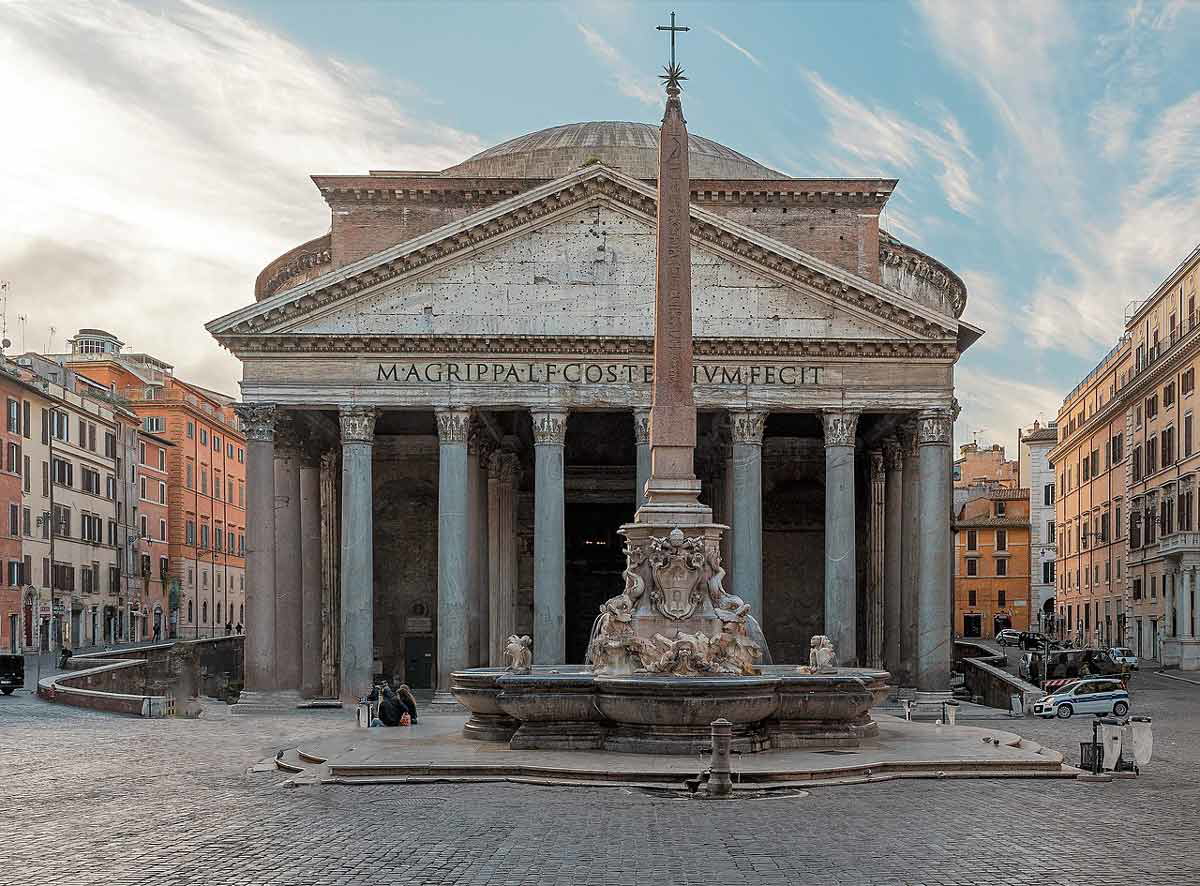
The Pantheon is Rome’s most iconic temple, with its large rotunda shaped like a concrete dome and skylight that illuminates the temple of “all the gods”, which was subsequently converted into a church in the early 7th century AD. It has remained in continuous use until the modern day, and it still represents the largest unreinforced concrete dome in the world.
The Pantheon was originally built as part of Augustus’ new imperial Rome by his right-hand man, Agrippa. Dedicated in 25 BC, it was a temple to all the gods, “the pantheon.” Agrippa had intended to place a statue of Augustus inside the temple, but he refused the honor. A statue of the Deified Julius Caesar was included.
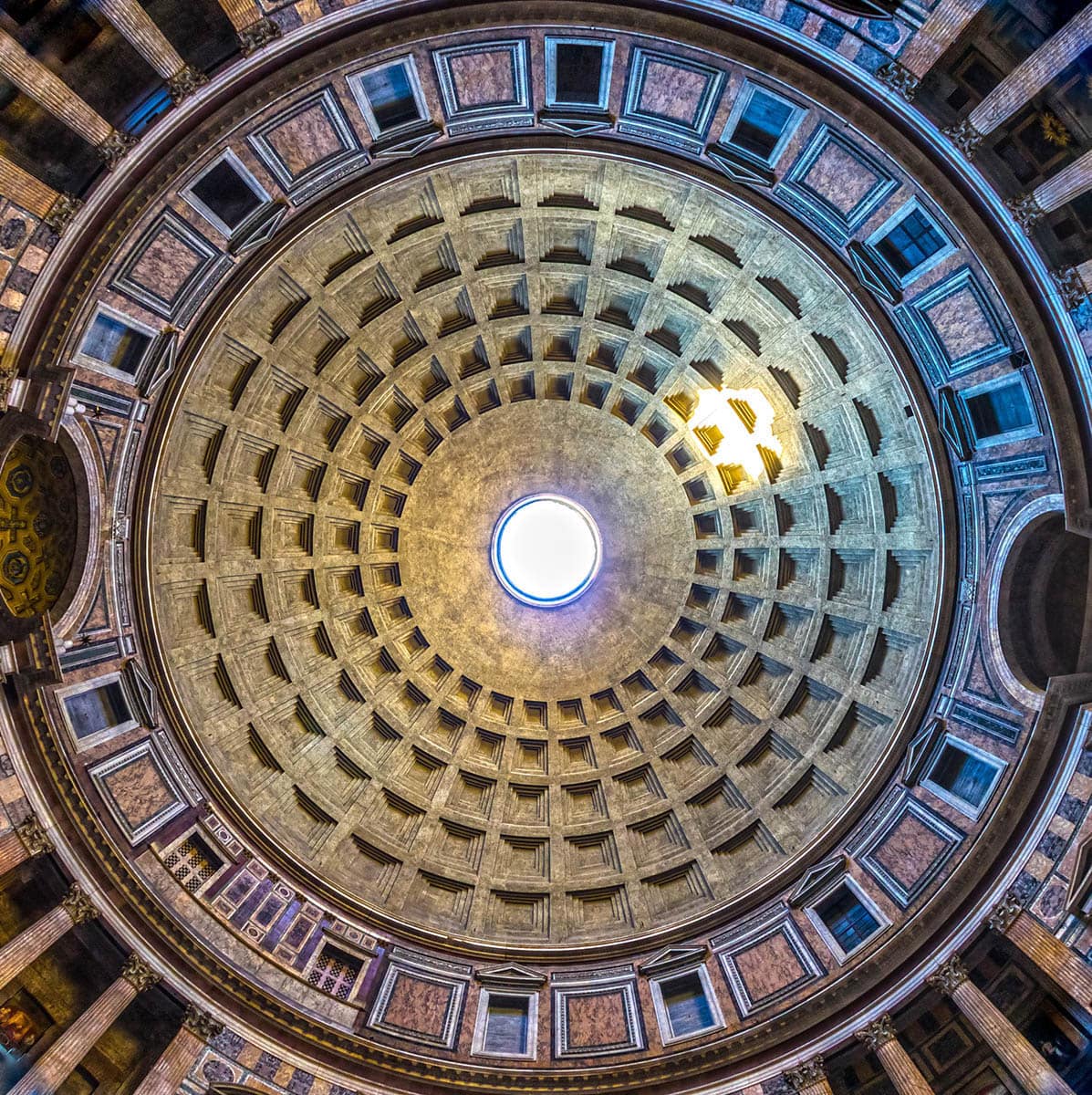
The original Pantheon looked nothing like the familiar domed building. It burned during the fire of AD 80, and while it was immediately restored, it was struck by lightning in AD 110. The Pantheon that stands today was dedicated by Hadrian in AD 126.
3. The Circus Maximus: The Colossal Cradle of Ancient Chariot Racing
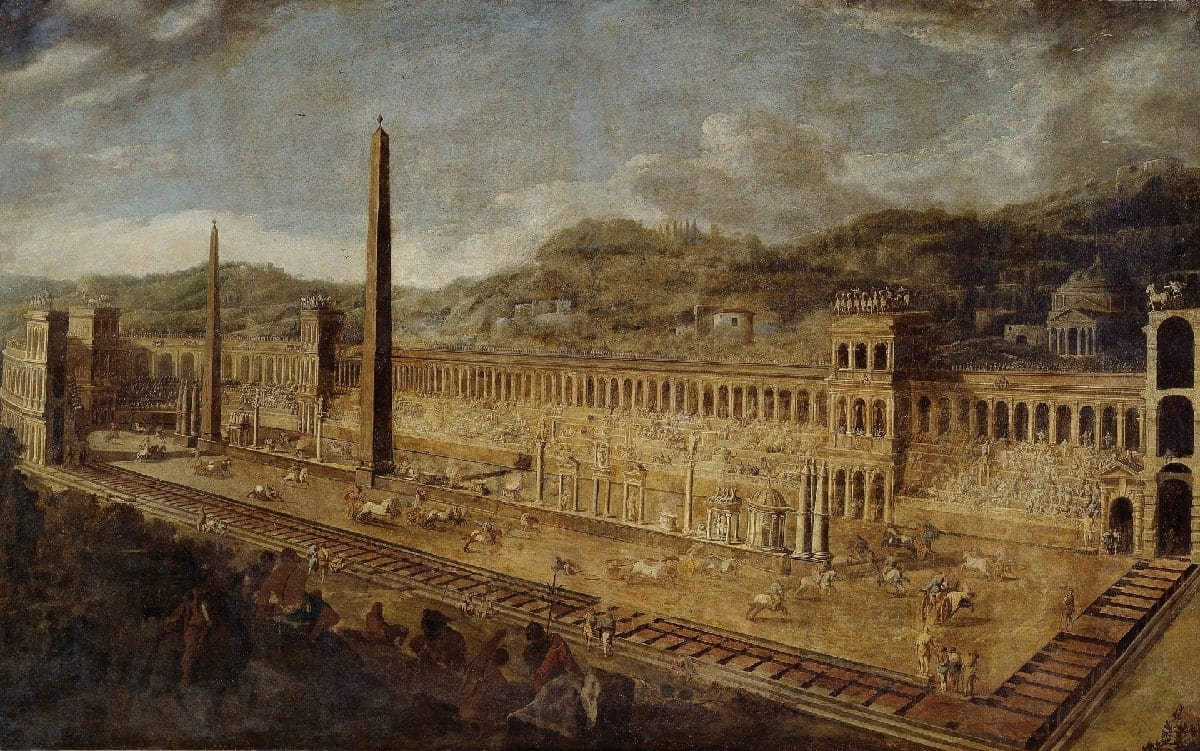
Hosting chariot-racing events, the Circus Maximus was the biggest stadium in the Roman world and could seat an estimated 150,000 to 300,000 people. Measuring 2,037 feet (621 meters) in length and 387 feet (118 meters) in width, it primarily hosted Rome’s popular chariot racing competitions.
Arcades beneath the stadium were also a social hub, hosting cafes, fortune tellers, and prostitutes. Roman triumphal processions marched through the Circus Maximus, as did some religious processions.
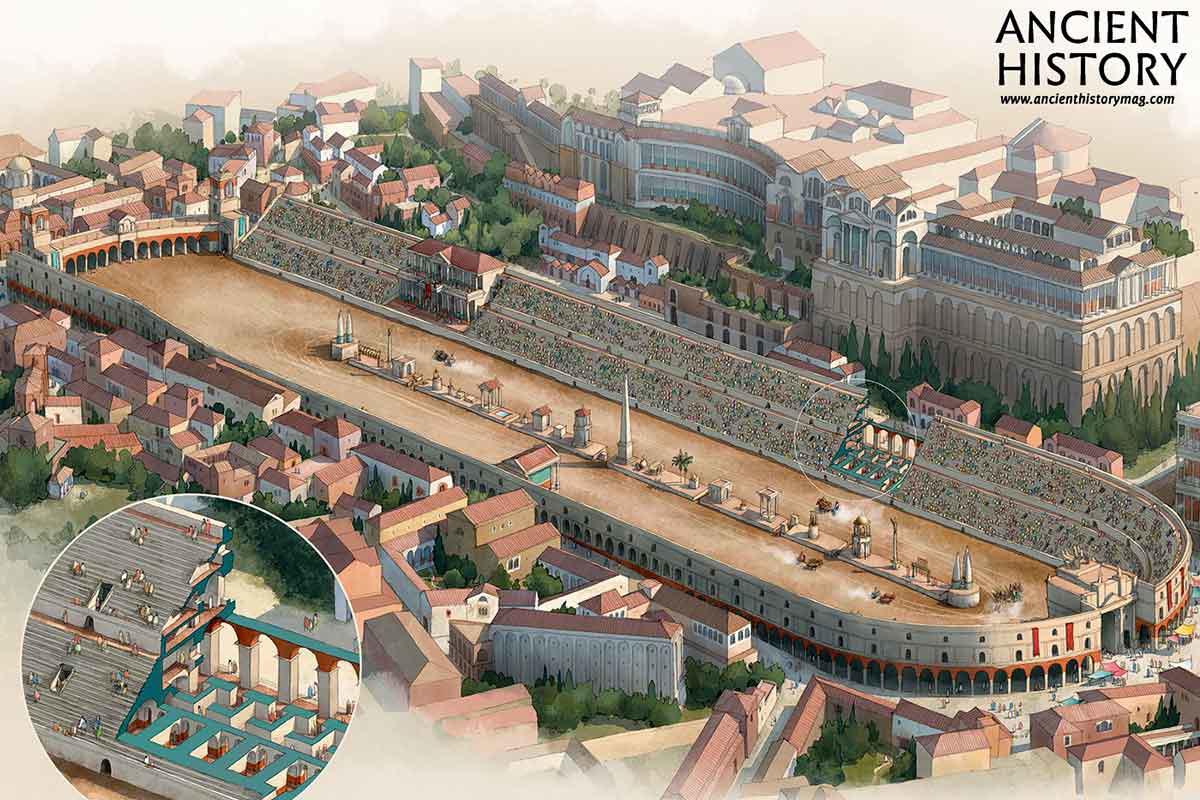
The original stadium was built in the 6th century BC, and it was renovated and expanded over the centuries. The first iterations of the stadium were primarily made of wood, which would have been replaced frequently. It was only at the end of the 1st century AD that the entire structure was rebuilt in stone. This was likely a result of a great fire that gutted the former structure in AD 64 (the great fire may have started near the stadium).
The stadium fell into disuse in the 6th century AD. Prone to flooding, the alluvial soil covered the original track, which is now buried many feet below the modern surface. In the centuries that followed, the site was a housing area, a market, a quarry, and later, a gas works, which was relocated in 1910. Throughout the 20th century, numerous excavations were conducted in the area. The area of the stadium is now a public park.
4. The Forum: The Monumental Epicenter of Roman Civic Life
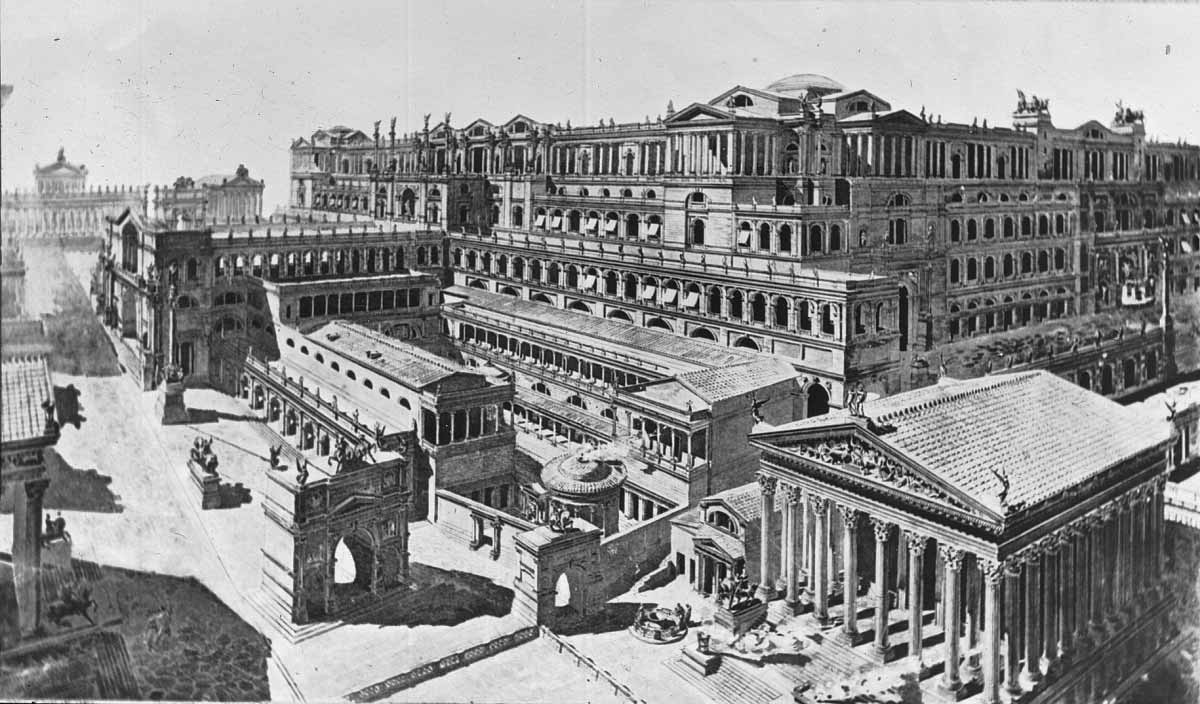
The Forum Romanum was the center of Roman life. It was here that the Romans discussed legal matters, made laws, and held games. It was the site of elections, triumphal processions, and home to many governmental buildings. Rather than being a single building, the Forum was a series of major buildings, each having a different function, all surrounding the Comitium, the open-air, central meeting place.
The history of the site goes back to the 8th century BC when Rome was founded. It was the location of early shrines and temples, while the Comitium was used as a marketplace. The Temple of the Vestal Virgins was built on the site in the 7th century BC and is believed to have been a simple circular hut. During the era of the Roman Republic, the Comitium was a hub for all judicial and political life in Rome, and surrounding buildings and temples were built, adding to the Forum’s footprint. In the 5th century BC, the Temple of Saturn was built, along with the Temple of Castor and Pollux, and in the following century, the Temple of Concord was built.
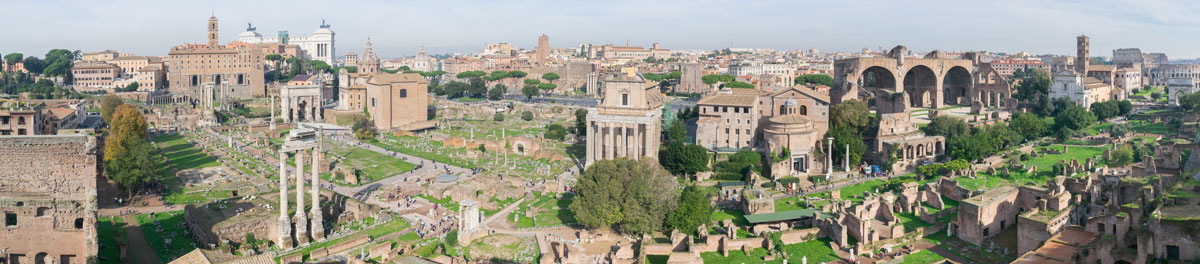
Improvements continued through the Republican era and into the Imperial era, increasing the size and grandeur of the Forum. After the fall of the Roman Empire, many of the buildings were converted into churches, and despite some preservation efforts, by the end of the 8th century AD, the temples had been abandoned and were in ruins. In the 16th century, the Forum suffered some of its worst damage when it was plundered for stone by Pope Paul III, who used the materials to build Saint Peter’s Basilica.
5. Castel Sant’Angelo and the Imperial Cult of Death
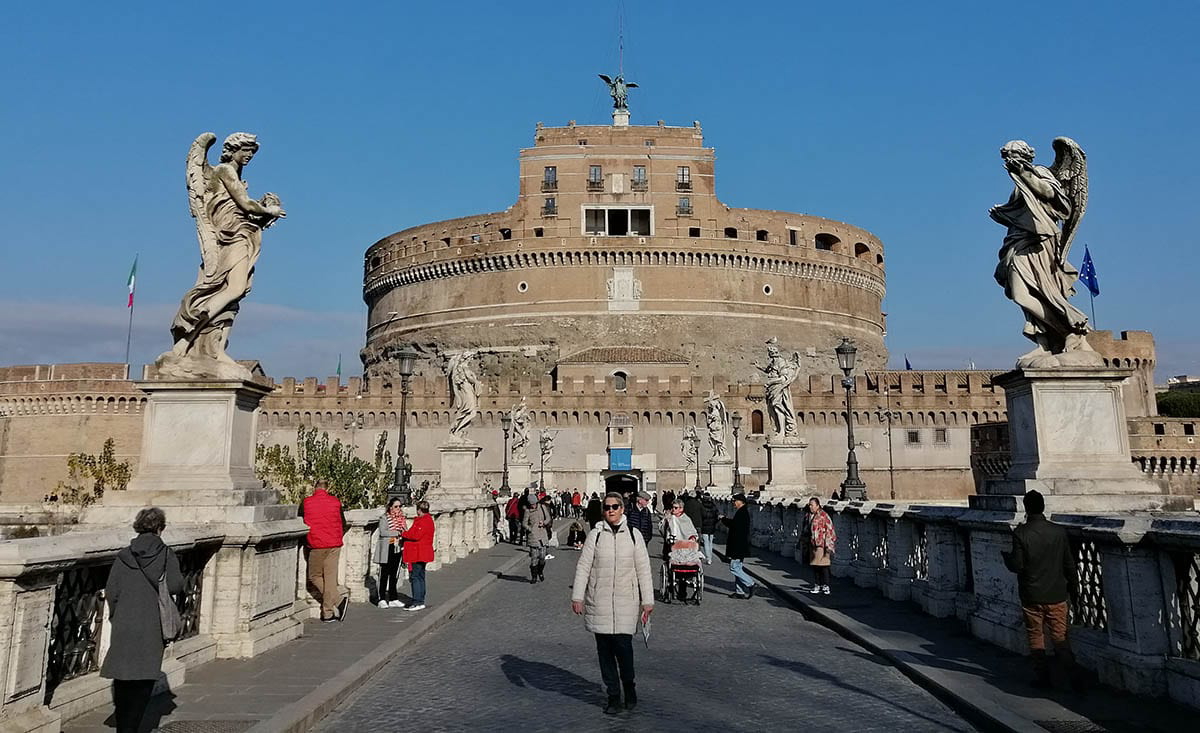
Today, the Castel Sant Angelo is known as a Vatican stronghold that protects the Catholic faith. It is particularly well known from the sack of Rome in 1527, when the Swiss Guard heroically used the castle to save the Pope from mutinous troops of the Holy Roman Empire.
It was originally built in the 2nd century AD as a monumental mausoleum for Hadrian and the Antonine imperial family. At this time, it was made of white marble and topped with a bronze statue of Hadrian driving a four-horse chariot. Inside was an urn hall containing the ashes of all the Roman emperors from Hadrian to Caracalla and many of their family members.
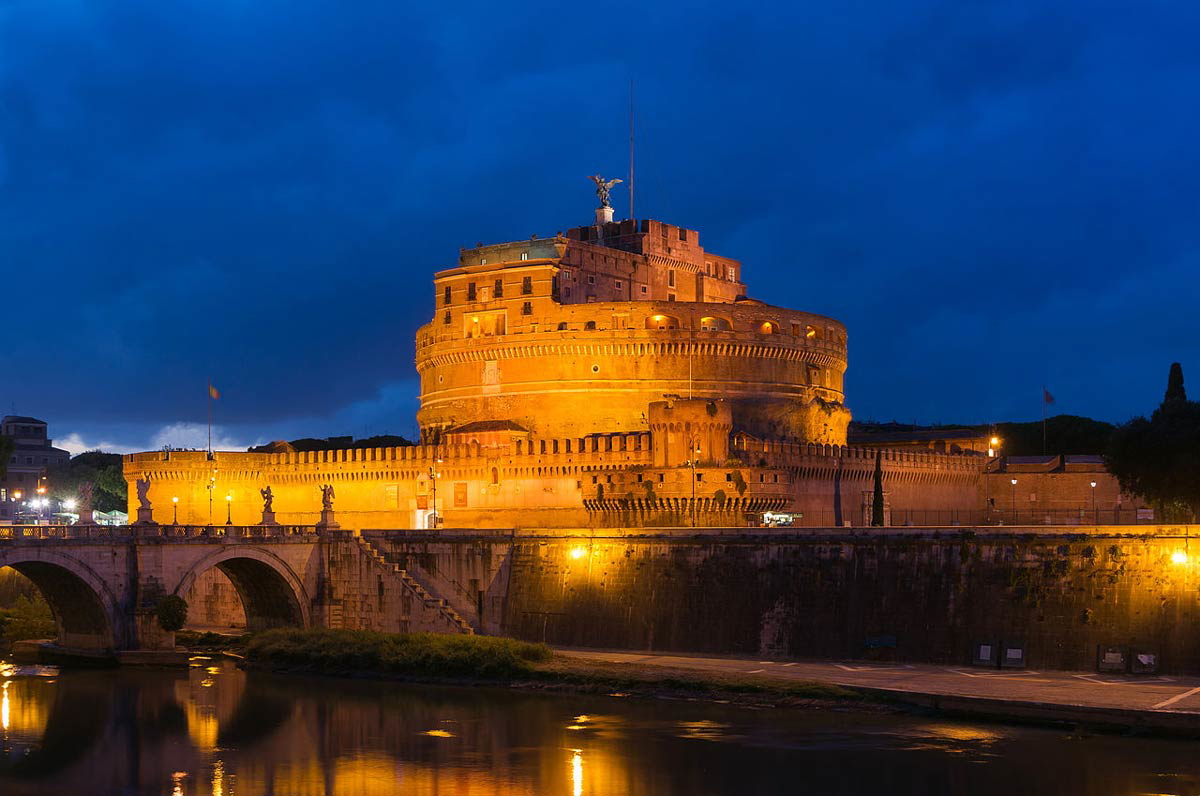
The structure took on a defensive role in the 3rd century AD when Aurelian incorporated the structure into his famous walls. During the Gothic Wars, Byzantine soldiers used the priceless marble statues inside as missiles. In the 13th century, the Papacy took full control of the fortress and built the secret, 800-meter-long fortified elevated corridor connecting St. Peter’s Basilica straight to the castle. The fortress was later modernized to survive the gunpowder era.
6. The Baths of Caracalla and the Scale of Imperial Leisure
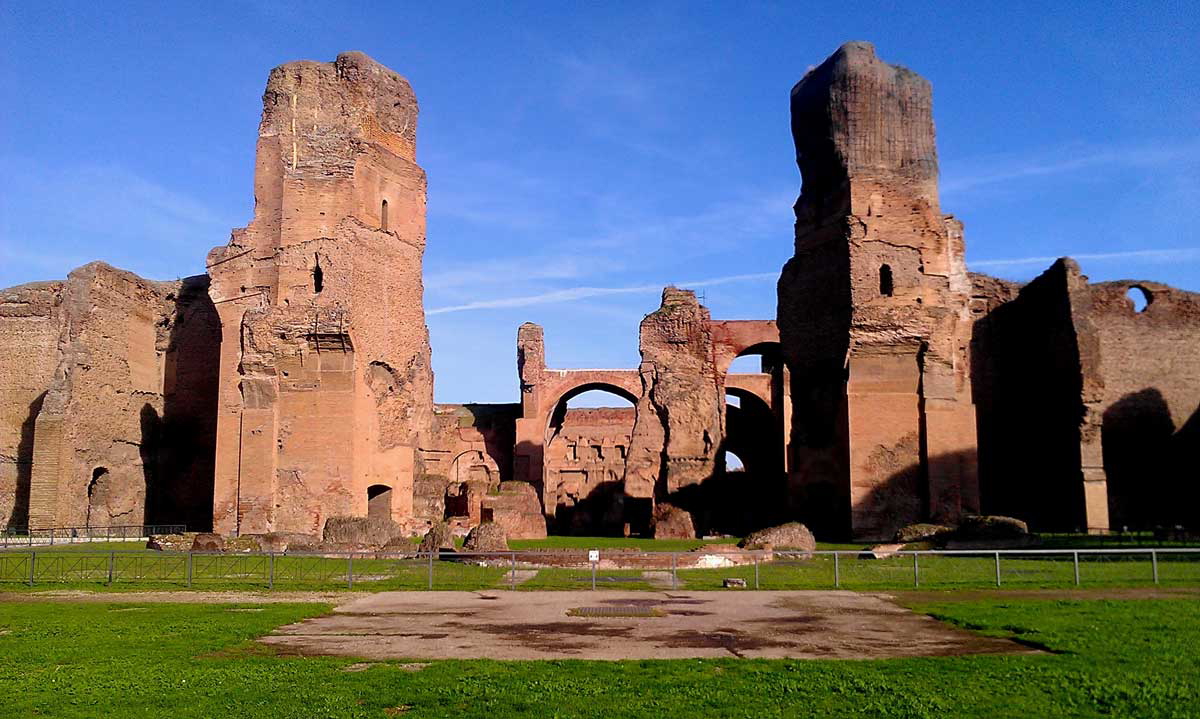
Built in the early 3rd century AD, the Baths of Caracalla were a central meeting point and a hub of social activity during the later centuries of the Roman Empire. They were the second largest baths in Rome after the Baths of Diocletian, which were built at the turn of the 4th century AD. Despite the latter being bigger and closer to the city center, the Baths of Caracalla are generally considered to be more famous due to the fact that they communicate a better sense of vastness and luxury, while the ruins are also better preserved.
The baths were built on the orders of Emperor Septimius Severus and completed by his son, Caracalla. They were inaugurated in AD 216. Extra work on decorative features likely continued until AD 235.
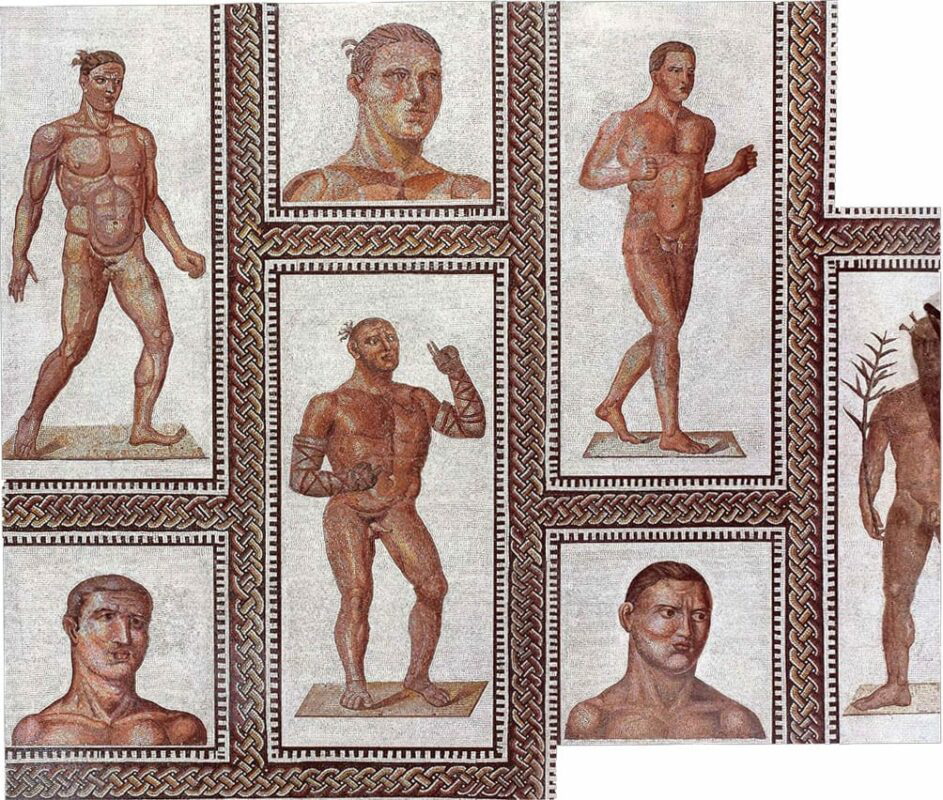
The main purpose of the baths was, obviously, bathing. There were hot, warm, and cold baths available. However, the Baths of Caracalla served many other social functions. It was a place to relax and socialize, where people could meet up and discuss various matters of importance (and unimportance). The site also had palaestrae, places where visitors could engage in wrestling or boxing. Visitors could also take long walks around the site’s approximately 62 acres.
The baths continued to function until AD 537, when King Vitiges of the Ostrogoths laid siege to Rome and cut off the water supply. The site was abandoned and never saw use as baths again. It was damaged in an earthquake in 847 and was used for building material over the centuries that followed. Subsequent interest in the history of the site prompted excavations from the early modern period, which continued, along with restoration work, to the present day.
7. The Arch of Constantine and the Art of the Triumphal Parade
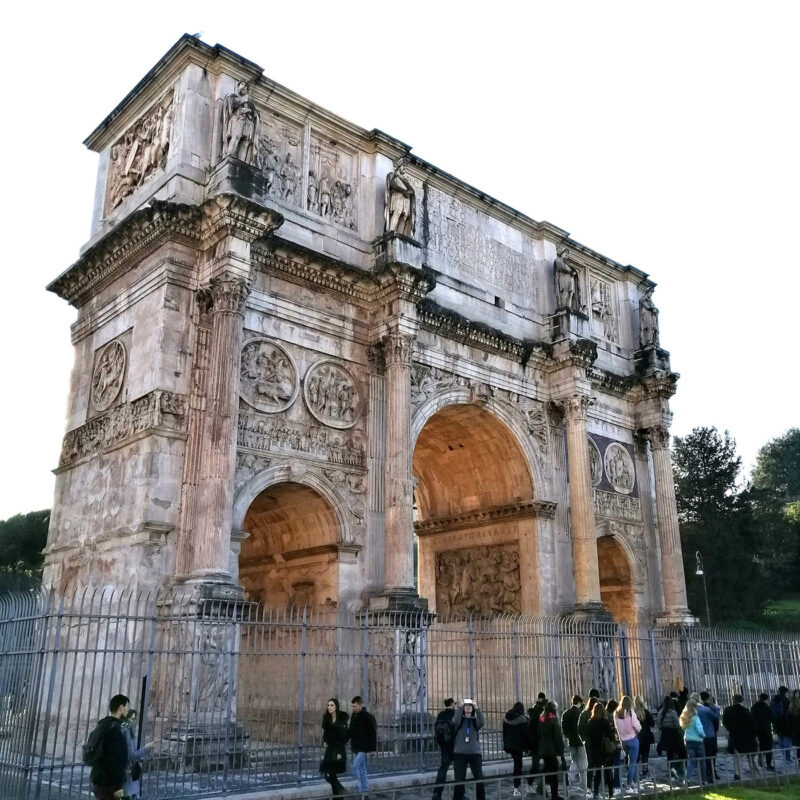
Triumphal arches were often erected in Rome to celebrate the great deeds of its generals and emperors. Probably the most famous surviving arch is the Arch of Constantine, erected in AD 315 to commemorate his victory at the Battle of the Milvian Bridge in AD 312. This was significant for two reasons. First, this was a civil war battle. Usually, such monuments were only erected for victory over foreign aggressors, not other Roman citizens. Secondly, this was the battle in which Constantine reportedly saw a sign from God, leading to his conversion to Christianity, and eventually the Christianization of the Roman world.
The arch was built in a rush to celebrate the emperor’s decennalia. Therefore, instead of carving the arch from scratch, the builders took reliefs from other arches and incorporated them into their construction. There are fragments taken from monuments dedicated to Trajan, Hadrian, and Marcus Aurelius.
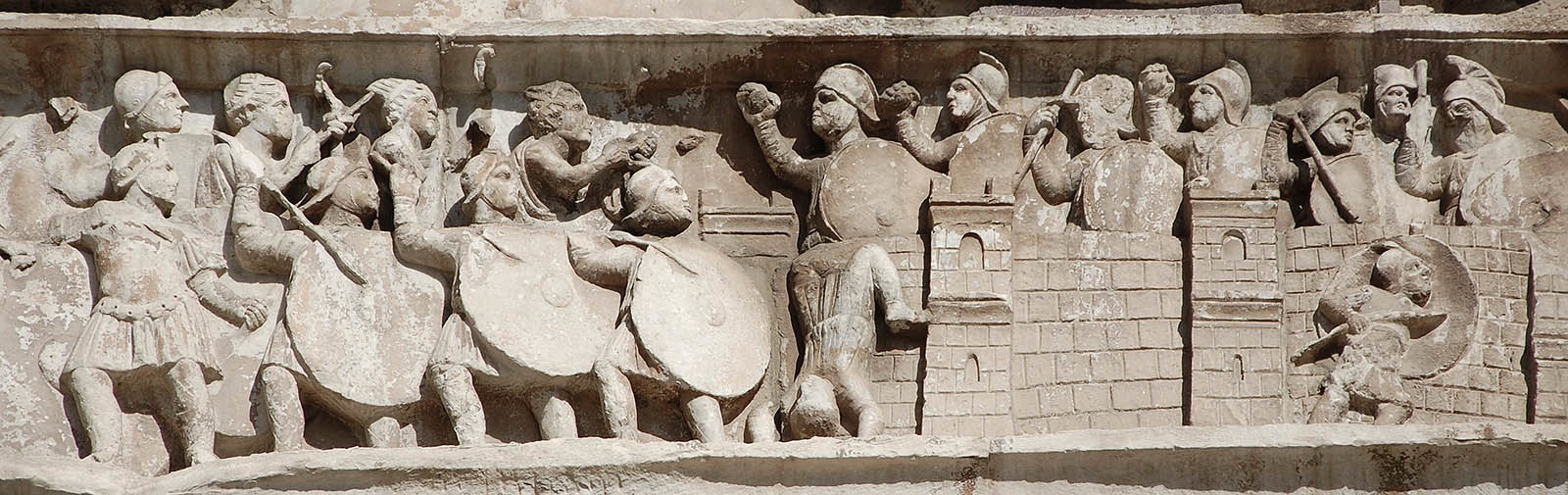
In the 12th century, a powerful Roman aristocratic family called the Frangipane incorporated the triumphal arch into their private, fortified feudal estate. They built brick walls right into the arches and used it as a defensive tower. These walls were later removed, which allowed scavengers to steal parts of the arch. Most recently, it was struck by lightning in September 2024.
8. The Curia Julia and the Seat of Senatorial Power
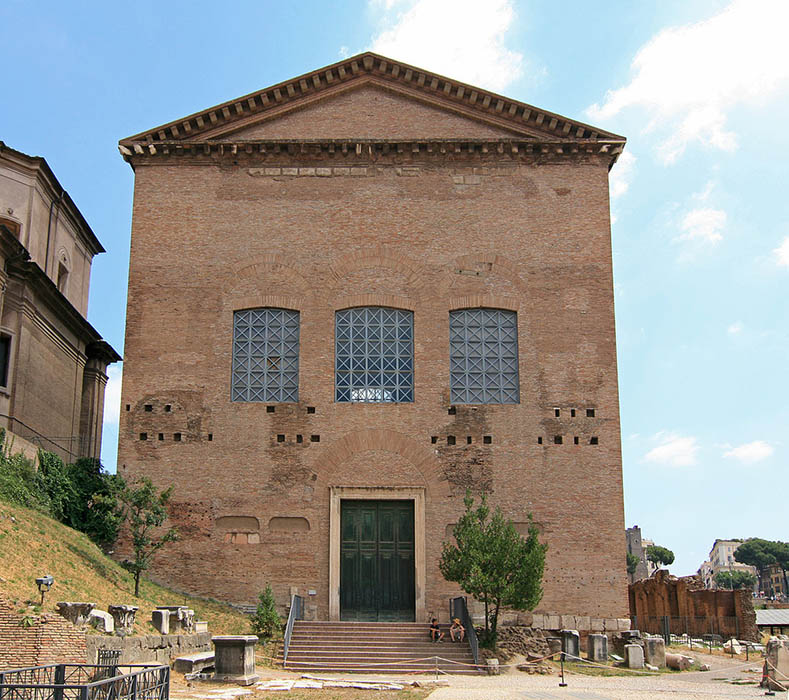
The Curia Julia, located in the Roman Forum, was built to replace the earlier meeting house of the Senate, destroyed during a riot at the dawn of the imperial age. Julius Caesar started construction of the new Curia in 44 BC, close to his new forum, but was assassinated before it could be completed. It was finished by his successor Octavian in 27 BC, the same year he adopted the name Augustus. Like several other structures, it was destroyed by fire a number of times and rebuilt.
Like so many other Roman buildings, it was saved from destruction by being converted into a church in the 7th century AD. This stopped it from being harvested for materials for other building projects.
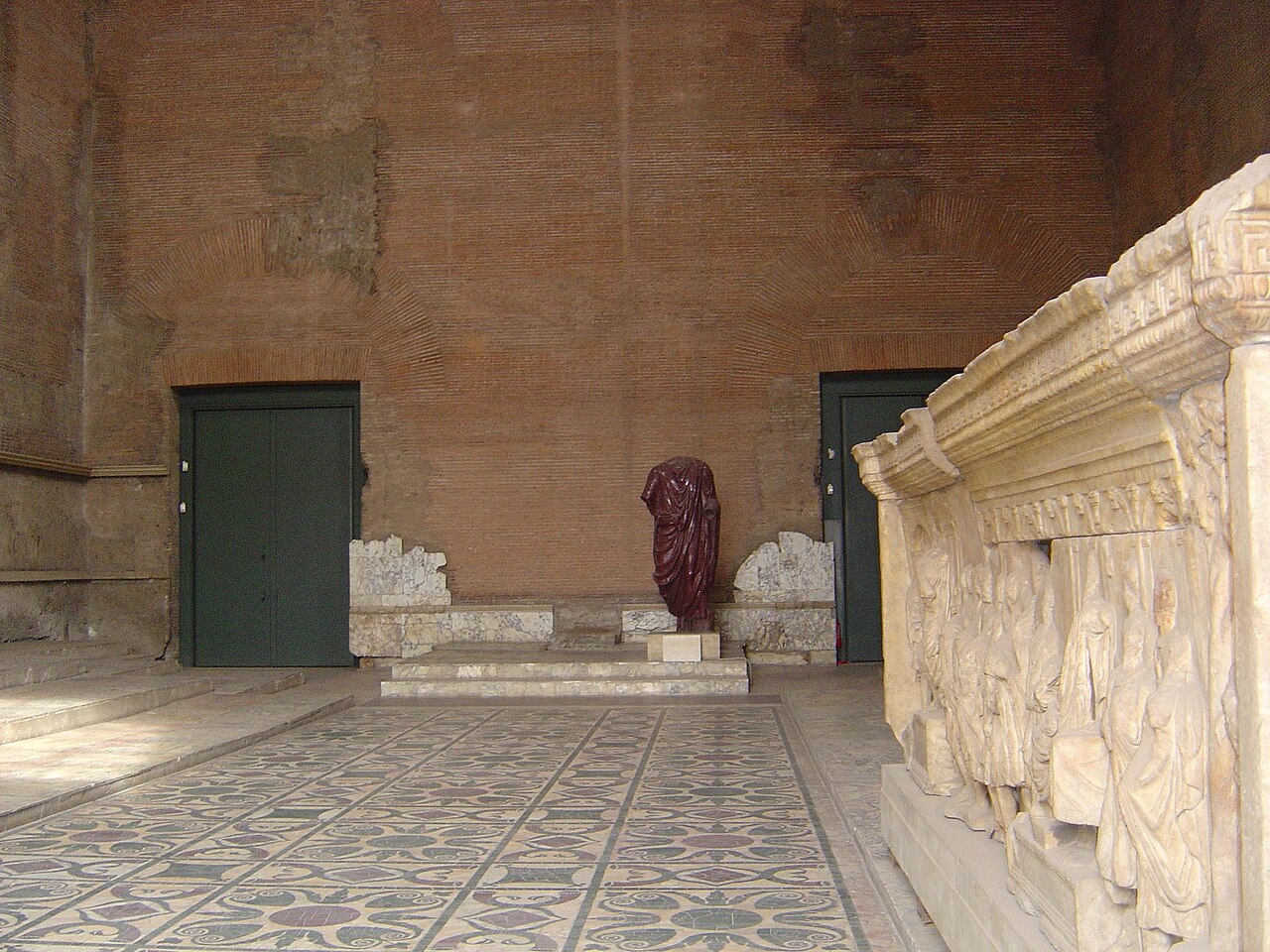
During the Renaissance, Pope Alexander VII decided to renovate the Basilica of San Giovanni in Laterano. He ordered the massive, original Roman bronze doors of the Curia Julia to be unhinged and moved there. If you visit San Giovanni in Laterano today, you are walking through the exact bronze doors Roman senators pushed open 2,000 years ago.
9. The Theater of Marcellus and the Evolution of Roman Drama
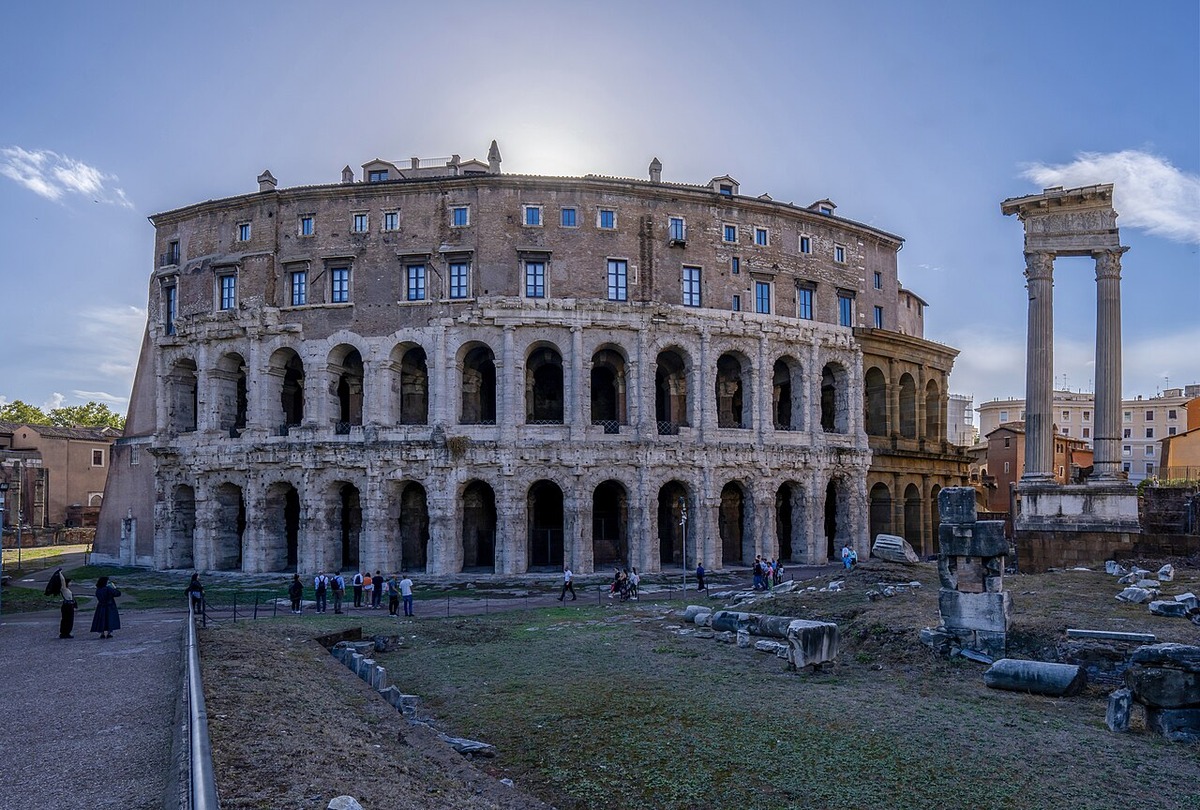
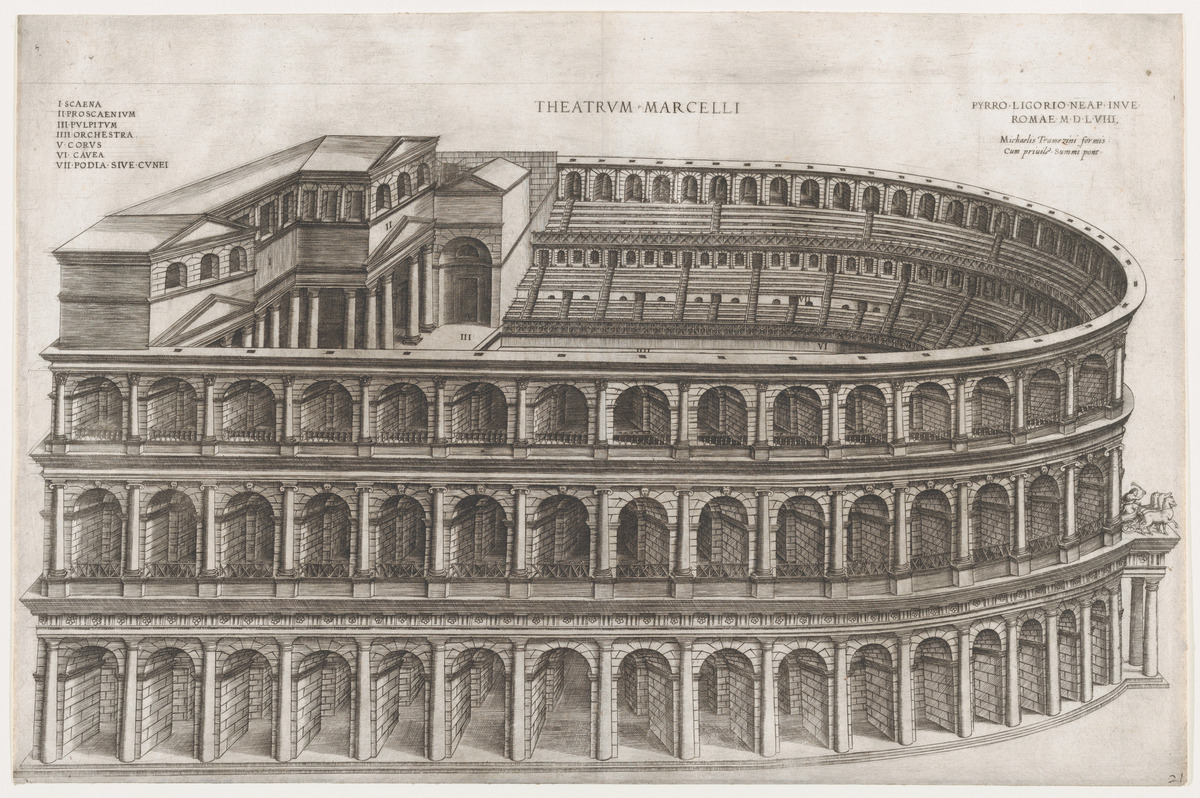
The Theater of Marcellus looks like a mini-Colosseum, but predates it by more than a century. In 55 BC, Pompey built the great Theater of Pompey, Rome’s first stone theater, to host plays, music, and poetry. Wanting to outdo his now dead rival, Caesar bought up land along the Tiber River and started work on the Theater of Marcellus. Again, he died before it was completed, but it was finished by Augustus in 12 BC, who named it for Marcellus, his nephew, who had been his selected heir until his premature death.
The theater originally stood three stories tall and could hold an estimated 11,000 to 14,000 spectators. It acted as a blueprint for the Colosseum to be built on a much larger scale.
Sadly, by the 4th century AD, it had already fallen into disuse, and elements were taken for other building projects. In the 11th and 12th centuries, powerful Roman noble families took over the ruins, filled in the open ancient arches with heavy stone barricades, and turned the theater into a fortified medieval castle. In the 1500s, the wealthy Savelli family hired the famous Renaissance architect Baldassarre Peruzzi to transform the fortress into a grand palace. Restoration began in the 18th century, with additions stripped away and the original Roman facade visible again.
10. The Capitoline Temple and the Epicenter of Roman Religion and Imperial Power
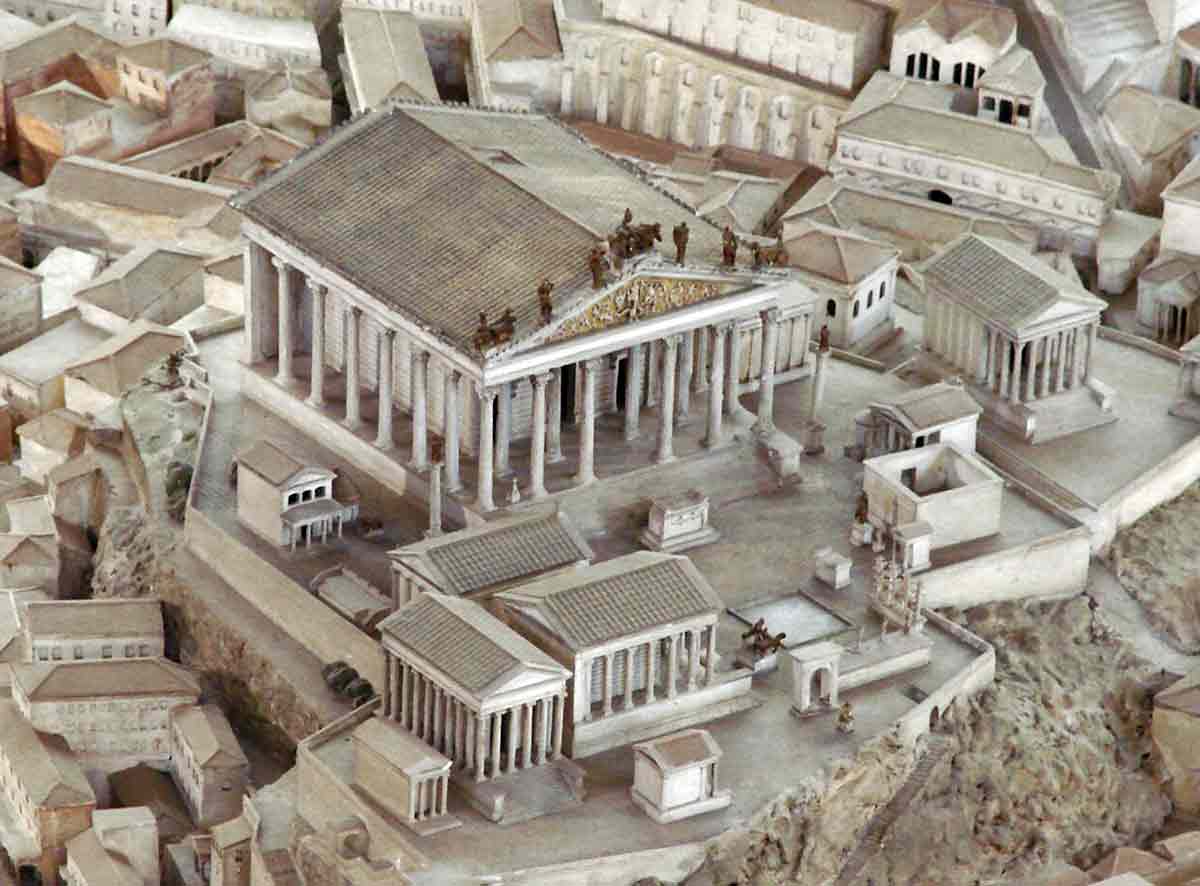
If you visit the Roman Capitoline Hill today, you will see Michelangelo’s beautifully designed Piazza del Campidoglio, flanked by the grand palaces of the Capitoline Museums, imposing structures that celebrate the greatness of Rome. In ancient times, this was the site of the Capitoline Temple, dedicated to Rome’s principal triad of gods, Jupiter Optimus Maximus, Juno Regina, and Minerva. From the earliest times, it was the center of the Roman state religion.
The first iteration of the temple was reportedly built under Rome’s kings in the 6th century BC. It became integrally embedded into Rome’s religious life as the “finishing line” for triumphs and the vault that stored the Sibylline Books, sacred prophecies that guided the Romans in times of struggle.
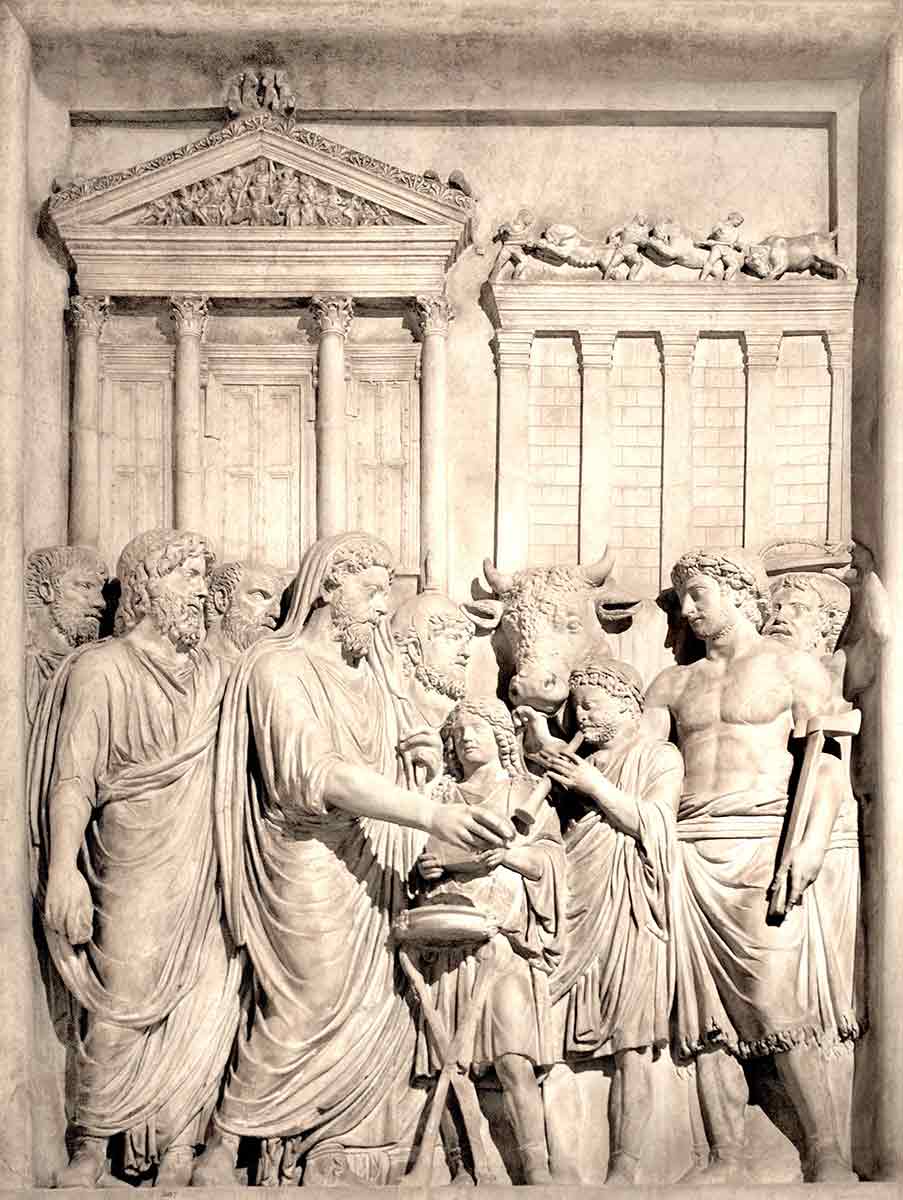
The temple was destroyed by fire several times, most notably during Sulla’s civil war of 83 BC, and again during the civil war of AD 69. While Vespasian restored the temple, it burned again during the great fire of AD 80. This saw it rebuilt in its most extravagant version by Domitian. He spared no expense, spending over 12,000 talents of gold just to plate the roof tiles and gild the massive front doors.
When Rome turned Christian, the temple was closed. During the Vandal sack of Rome in AD 455, invaders ripped off Domitian’s golden roof tiles. During the Middle Ages, the structure was progressively dismantled for its marble and stone. A noble family even built a medieval fortress over the ruins.